
From Fossil Fuel Dependence to Energy Independence: Solar's Role in Ireland's Transition
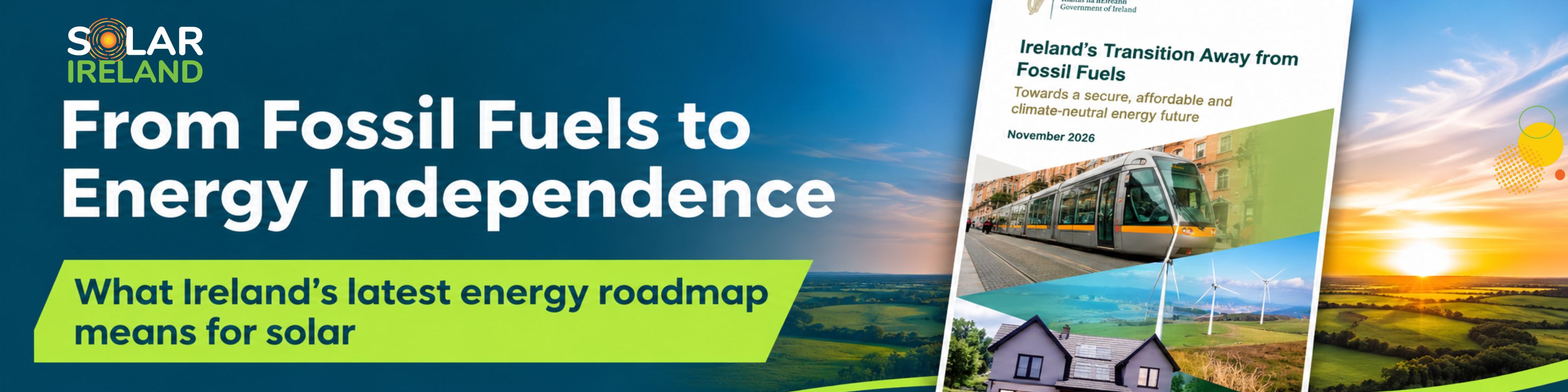
Ireland's transition towards a cleaner, more secure energy future gained further momentum at COP31, where Minister for Climate, Energy and the Environment Darragh O'Brien launched the country's Roadmap on Transitioning Away from Fossil Fuels. Published shortly after Ireland's first Electrification Roadmap, it adds another important dimension to the national conversation about how we produce, use and secure our energy.
Launched on 18 November, the new roadmap sets out Ireland's approach to reducing its reliance on fossil fuels in a just, orderly and equitable manner. While climate action remains central, the document also reflects a growing recognition that the transition is about much more than emissions. It is equally about protecting Ireland from volatile international energy markets, strengthening economic resilience and ensuring a secure, affordable energy supply for the future.
Two roadmaps, one shared direction
Although they approach the energy transition from different perspectives, the two roadmaps are closely connected.
Ireland's Electrification Roadmap examines how electricity can play a greater role across transport, heating, industry and other areas of the economy, while the Transition Away from Fossil Fuels Roadmap considers the wider shift towards an energy system that relies less on fossil fuels.
Together, they point towards a future in which more of Ireland's energy needs can be met through clean electricity generated closer to home, supported by a modern, flexible electricity system.
The latest roadmap brings together measures already in place or under development, rather than introducing new fossil fuel phase-out dates or replacing existing Climate Action Plans. It also recognises the importance of protecting energy security and ensuring that households, workers and communities benefit from the transition.
Solar's growing contribution
Ireland's solar sector has undergone a remarkable transformation in recent years, moving from an emerging technology to an increasingly important part of the country's electricity mix.
With more than 3 GW of installed solar capacity, solar energy is already helping to reduce reliance on fossil fuel generation while providing households, farms and businesses with opportunities to produce their own electricity.
This contribution will become increasingly valuable as Ireland electrifies more of its economy. Electric vehicles, heat pumps and industrial electrification will all create additional demand for electricity, making it essential that renewable generation continues to expand alongside the infrastructure needed to support it.
Solar offers considerable potential in this regard, complementing wind generation and working alongside battery storage and other flexibility solutions to support a more diverse and resilient electricity system.
Building a more secure energy future
For Solar Ireland, the publication of these roadmaps reinforces the importance of creating the right conditions for renewable energy to continue growing.
Expanding grid capacity, improving connection processes and supporting energy storage and flexibility will all be essential, alongside planning systems and investment frameworks that provide greater certainty for projects at every scale.
Ireland has already demonstrated what can be achieved when renewable energy development is supported by the right policies and investment. Building on that progress will allow more homes, businesses and communities to benefit from clean electricity while strengthening the country's ability to meet its own energy needs.
The wider significance of this transition will also be in focus in 2027, when Ireland and Tuvalu co-host the Second International Conference on Transitioning Away from Fossil Fuels, providing an opportunity to share progress and contribute to international efforts towards a more sustainable energy future.
Ultimately, reducing Ireland's dependence on fossil fuels is about more than changing how we generate electricity. It is about creating an energy system that is more resilient, more affordable over the long term and better equipped to support the needs of a changing economy.
Solar has an important role in that future, not simply as a source of renewable electricity, but as part of a broader opportunity to strengthen Ireland's energy independence for generations to come.
Further reading